
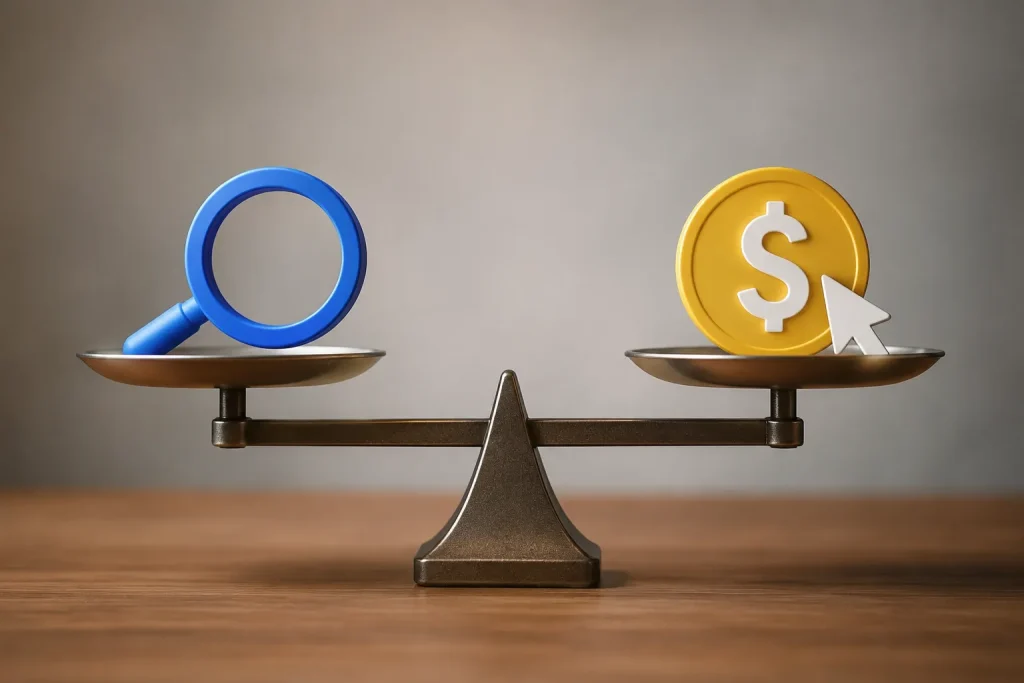
Understanding the difference between SEO and Google Ads helps businesses choose the right digital marketing strategy. Both methods aim to increase website traffic, but they work differently. Search engine optimization focuses on earning organic visibility, while Google Ads provides paid exposure through sponsored placements.
Google processed more than 8.5 billion searches daily in 2025. Businesses compete aggressively for those searches. According to industry studies, the average click-through rate for the first organic result exceeds 27%, while paid ads receive varying click rates depending on industry and competition.
Knowing how these strategies perform helps companies allocate marketing budgets wisely. Some businesses prefer long-term growth through organic rankings. Others need immediate traffic and choose paid campaigns. Many successful brands combine both methods to maximize visibility.
We have worked with businesses that used both approaches. Results showed that combining organic rankings with paid campaigns often improved overall conversions and reduced customer acquisition costs. Understanding the strengths and limitations of each method helps create a balanced marketing plan.
Understanding SEO
How Search Engine Optimization Works
Search engine optimization improves website visibility in unpaid search results. Google evaluates hundreds of ranking factors when determining positions. These include content quality, page speed, backlinks, mobile usability, and user experience.
SEO focuses on long-term growth. High-quality content and technical improvements help websites earn authority over time. According to BrightEdge research, organic search drives 53% of website traffic across industries.
A strong SEO strategy includes:
- Keyword research.
- Content optimization.
- Technical website improvements.
- Internal linking.
- Backlink development.
- Mobile responsiveness.
Our experience shows that websites publishing consistent content for six to twelve months often experience significant traffic growth. Unlike advertising campaigns, organic rankings continue generating visitors without paying for every click.
Understanding Google Ads
How Paid Search Advertising Works
Google Ads is Google’s pay-per-click advertising platform. Businesses bid on keywords and pay when users click advertisements. Ads appear above organic search results and are labeled as sponsored content.
Google Ads offers immediate visibility. Campaigns can begin generating traffic within hours after launch. In 2025, average cost-per-click ranged from $2.69 in ecommerce industries to more than $8.00 in legal services.
Several factors influence advertising performance:
- Keyword competition.
- Quality Score.
- Ad relevance.
- Landing page experience.
- Geographic targeting.
- Daily budget settings.
Our campaigns showed that optimized ads with Quality Scores above 8 often reduced costs significantly. Businesses seeking quick lead generation frequently use paid campaigns because they provide measurable results and precise audience targeting.
Major Differences Between SEO and Google Ads
Comparing Cost, Speed, and Results
The biggest distinction between SEO and Google Ads lies in cost and timing. SEO requires ongoing optimization, while Google Ads involves paying for each visitor.
| Factor | SEO | Google Ads |
|---|---|---|
| Traffic Source | Organic | Paid |
| Time to Results | 3-12 months | Within hours |
| Cost Structure | Content and optimization costs | Pay-per-click model |
| Long-Term Value | High | Stops when spending ends |
| Click Credibility | Higher trust | Sponsored placement |
| Targeting Options | Keyword-based | Advanced audience targeting |
| Maintenance | Continuous optimization | Budget management |
SEO creates sustainable growth. Google Ads delivers immediate exposure. Businesses with urgent goals often favor advertising, while brands seeking long-term authority invest heavily in optimization.
We have observed that companies using both methods often achieve stronger market presence. Paid campaigns provide immediate leads while organic rankings build authority over time.
When Should Businesses Use SEO or Google Ads?
Choosing the Right Strategy
The choice between SEO and Google Ads depends on business objectives, competition, and available resources. Startups often use Google Ads to generate initial traffic. Established brands usually strengthen organic rankings for sustainable growth.
SEO works best when:
- Building long-term authority.
- Increasing organic traffic.
- Reducing customer acquisition costs.
- Publishing educational content.
Google Ads works best when:
- Launching new products.
- Promoting limited-time offers.
- Targeting specific audiences.
- Generating fast leads.
Digital marketing experts often recommend combining both strategies. Google Ads supplies immediate traffic while SEO builds authority and lowers dependence on advertising costs.
Our analysis of several campaigns revealed that websites using both channels experienced stronger conversion rates compared with relying on only one strategy. A balanced approach often delivers the best results. Start your journey with our guide to The Ultimate Guide to Building an Effective SEO Strategy.
Conclusion
Understanding the difference between SEO and Google Ads allows businesses to create smarter marketing strategies. SEO focuses on earning long-term organic visibility through quality content and website optimization. Google Ads delivers immediate exposure through paid search campaigns.
Neither approach is universally better. Each serves different goals and timelines. Businesses seeking sustainable growth benefit from SEO, while those needing rapid traffic often rely on Google Ads. Combining both strategies creates stronger visibility and more opportunities for customer acquisition. By aligning marketing goals with the right approach, companies can maximize search performance and build a stronger online presence.